

wierd. Dental Disease Is Considered “Normal” in Dogs?
One of the strangest things about modern canine health is how casually dental disease has been accepted as inevitable.
A dog with heavy tartar buildup, inflamed gums, foul breath, or visible tooth decay rarely surprises anyone anymore. In fact, many owners assume these changes are simply part of aging. Professional cleanings, tooth extractions, and chronic oral inflammation have become so routine within veterinary care that poor dental health is often viewed less as a preventable condition and more as an unavoidable stage of a dog’s life.
But the more time spent observing dogs closely, the more unusual that assumption begins to feel.
Dogs possess mouths built for far more than simply swallowing softened food or plain kibble once or twice a day. Their teeth are anatomically structured for gripping, puncturing, tearing, crushing, and prolonged chewing. Their jaw strength can handle connective tissue, cartilage, skin, tendon, and bone. So a dog eating, biologically speaking, was never meant to be so passive.
Yet modern dogs often live in ways that require very little use of those natural mechanics at all.
Many consume highly processed food that softens quickly, breaks apart easily, and requires minimal chewing effort before swallowing. Meals are frequently finished within minutes, followed by long stretches of inactivity or low engagement. At the same time, natural chewing behaviors are often reduced out of convenience, fear, time limitations, or simply because many owners were never taught how biologically important chewing may actually be.
The result is that severe dental buildup has become remarkably common even among otherwise loved and well-cared-for dogs.
What makes this conversation increasingly interesting is how noticeable the difference can become once dogs begin regularly engaging with fresh food and natural chewing again.
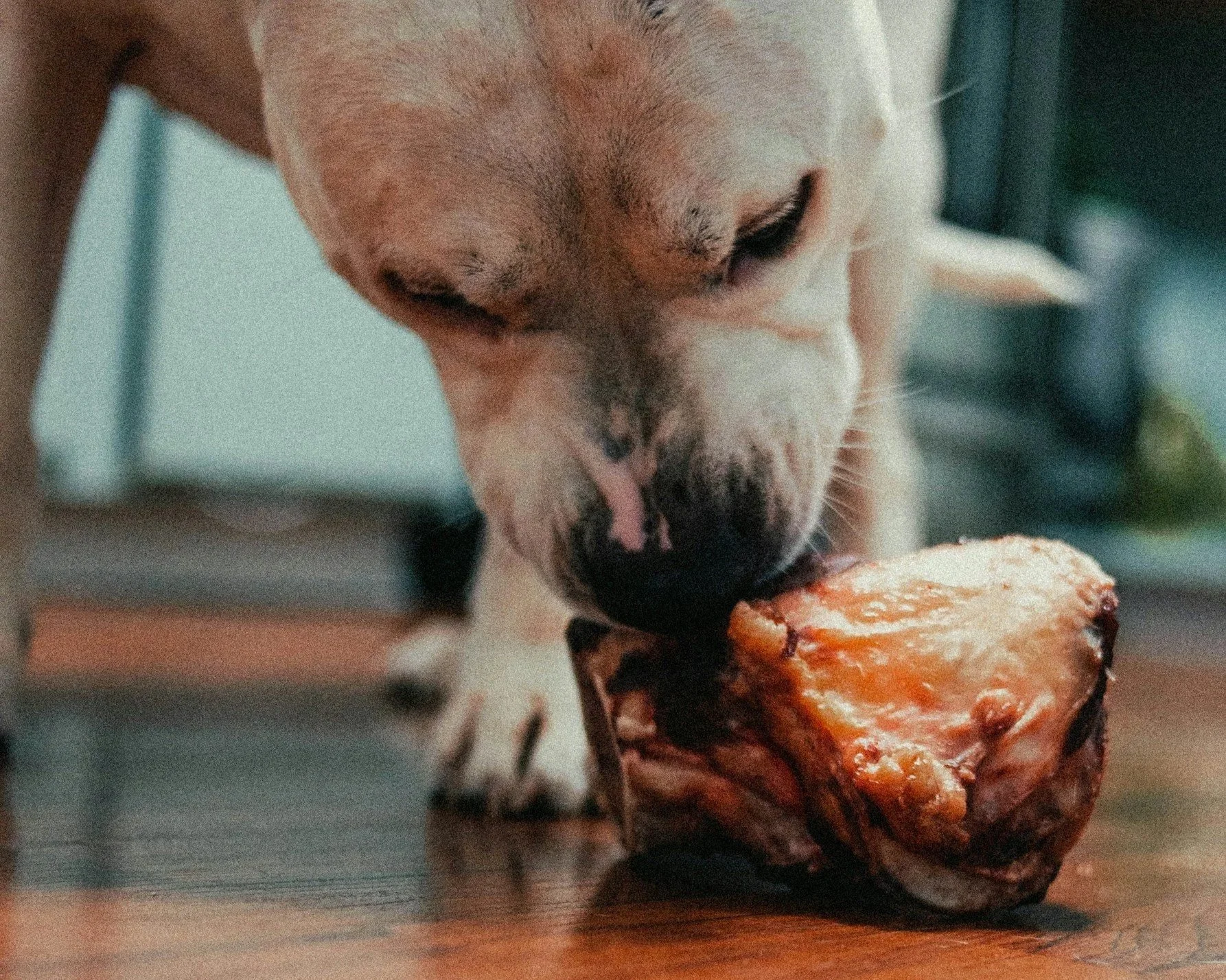
One thing we have consistently observed with our own dogs is how quickly dental health changes appear when those things disappear from the routine. When some of our dogs drift away from raw meals for a period of time or spend less time chewing through natural textures, the mouth is often one of the first places where adverse changes become visible. Bad breath grows noticeably stronger. Tartar begins accumulating more heavily along the gumline. The teeth gradually lose some of the naturally clean appearance that is often easier to maintain when chewing activity is consistent.
Then, once revert back to Raw Dog K9 Treats and Enhanced Meals, they begin improving again just as noticeably.
Observations like this are part of what has pushed more owners to think differently about canine oral health altogether. Not simply as a hygiene issue, but as something connected to broader biological behavior.
Chewing does not appear to serve only one purpose for dogs. Beyond the physical friction it creates across the teeth and gums, chewing also stimulates saliva production, engages jaw musculature, and activates deeply instinctive neurological behaviors connected to decompression and focus. Many dogs appear visibly calmer after extended chewing sessions, particularly when interacting with natural materials requiring sustained engagement.
This has led to growing conversations throughout the dog community surrounding species-appropriate enrichment and whether modern dogs may be living increasingly disconnected from the behaviors their bodies were originally designed around.
At the same time, more people are beginning to question whether modern convenience feeding has unintentionally normalized conditions that would once have been viewed differently. The pet industry has produced countless dental products, additives, sprays, and treats marketed toward oral health, yet severe plaque accumulation and periodontal disease remain incredibly widespread among domesticated dogs.
Perhaps part of the reason is that the conversation often centers on managing buildup after it occurs rather than asking why so many dogs experience chronic oral deterioration to begin with.
None of this suggests that every dog should eat the same way or that natural chewing alone replaces professional veterinary care. Canine health is complex, and dental disease can involve genetics, breed structure, age, medical history, and numerous other factors. But it does raise an important question about what has quietly become normalized within modern dog ownership.
Because the more closely people begin looking at canine biology, the harder it becomes to ignore how much the modern canine lifestyle differs from the conditions dogs physically evolved around.
